A New California Bill Could Raise Your Condo Costs.
If you own a condo in California, there's a bill moving through Sacramento that's worth paying attention to.
California AB 2050 could change how homeowners associations fund their reserves, potentially leading to higher HOA dues or special assessments in underfunded communities.
It's not law yet. But HOA reserve funding is already becoming more important for California condo owners, buyers, and sellers.
Key Takeaways
AB 2050 is not law yet — it is proposed California legislation and could still change.
Underfunded HOAs could be required to put more money into reserves — under the proposed bill, certain associations could be required to contribute at least 15% of their annual budget toward reserves until projected shortfalls are addressed.
That could mean higher costs for some condo owners — potentially through increased HOA dues or special assessments.
The proposed requirements wouldn't begin until January 1, 2032 — but HOA reserve funding can affect condo owners, buyers, and sellers today.
Lenders are also paying closer attention to HOA reserves — which can affect financing and the pool of buyers able to purchase within a community.
Buyers and sellers should understand the HOA's financial health — the reserve study, budget, meeting minutes, upcoming projects, and special assessments can reveal a lot about a condo community.
What Would AB 2050 Actually Do?
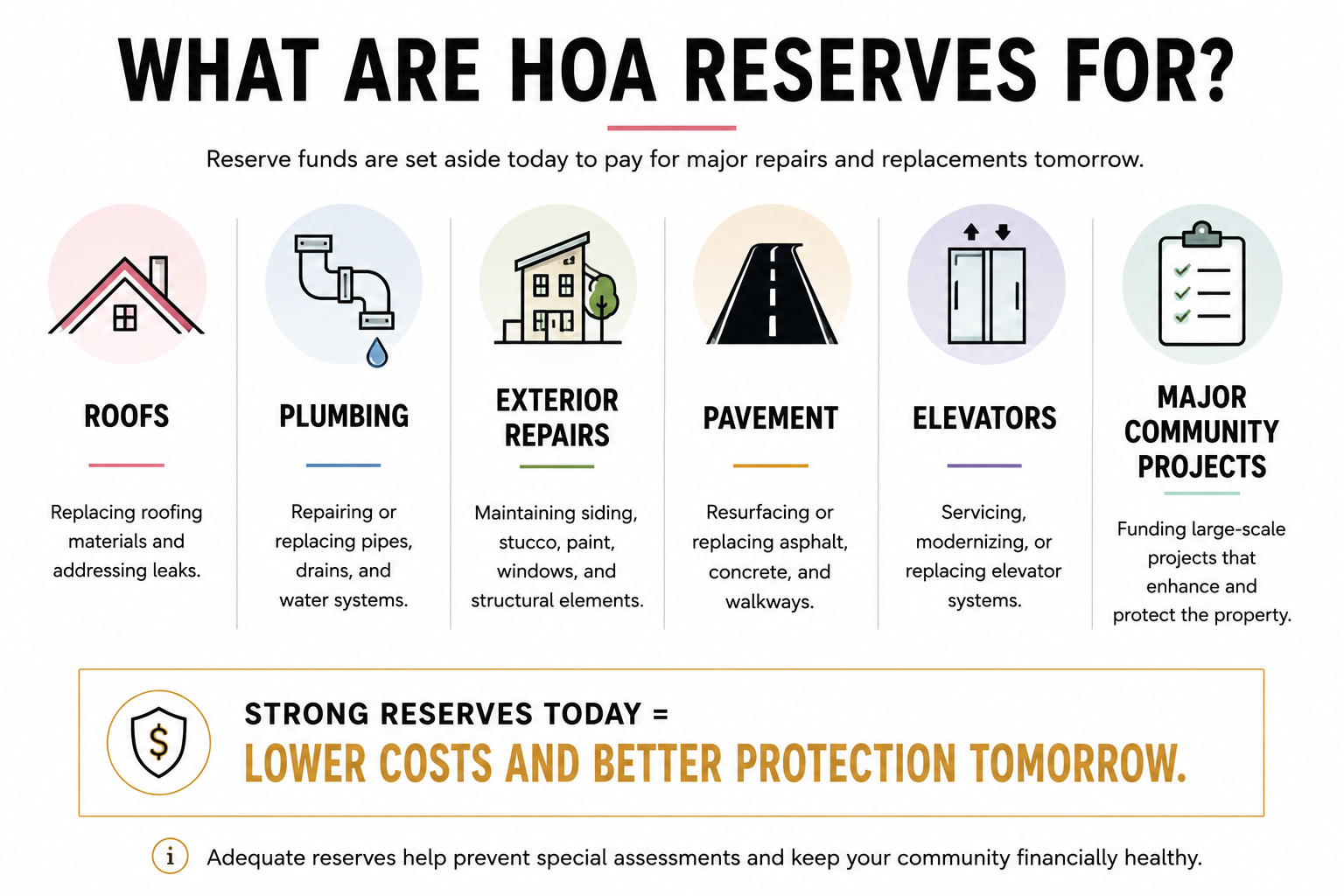
Every HOA sets aside money for major future expenses such as roofs, plumbing, elevators, pavement, and exterior repairs. That's the reserve fund.
A reserve study looks ahead and estimates when those expenses are likely to happen and how much money the HOA should be saving for them.
AB 2050 would strengthen California's HOA reserve-funding requirements.
Under the proposed bill, HOAs would look at their reserve needs over a 30-year period. If an association is projected to have a qualifying shortfall, it could be required to contribute at least 15% of its annual budget toward reserves until the problem is addressed.
If regular dues aren't enough, that could potentially mean a special assessment.
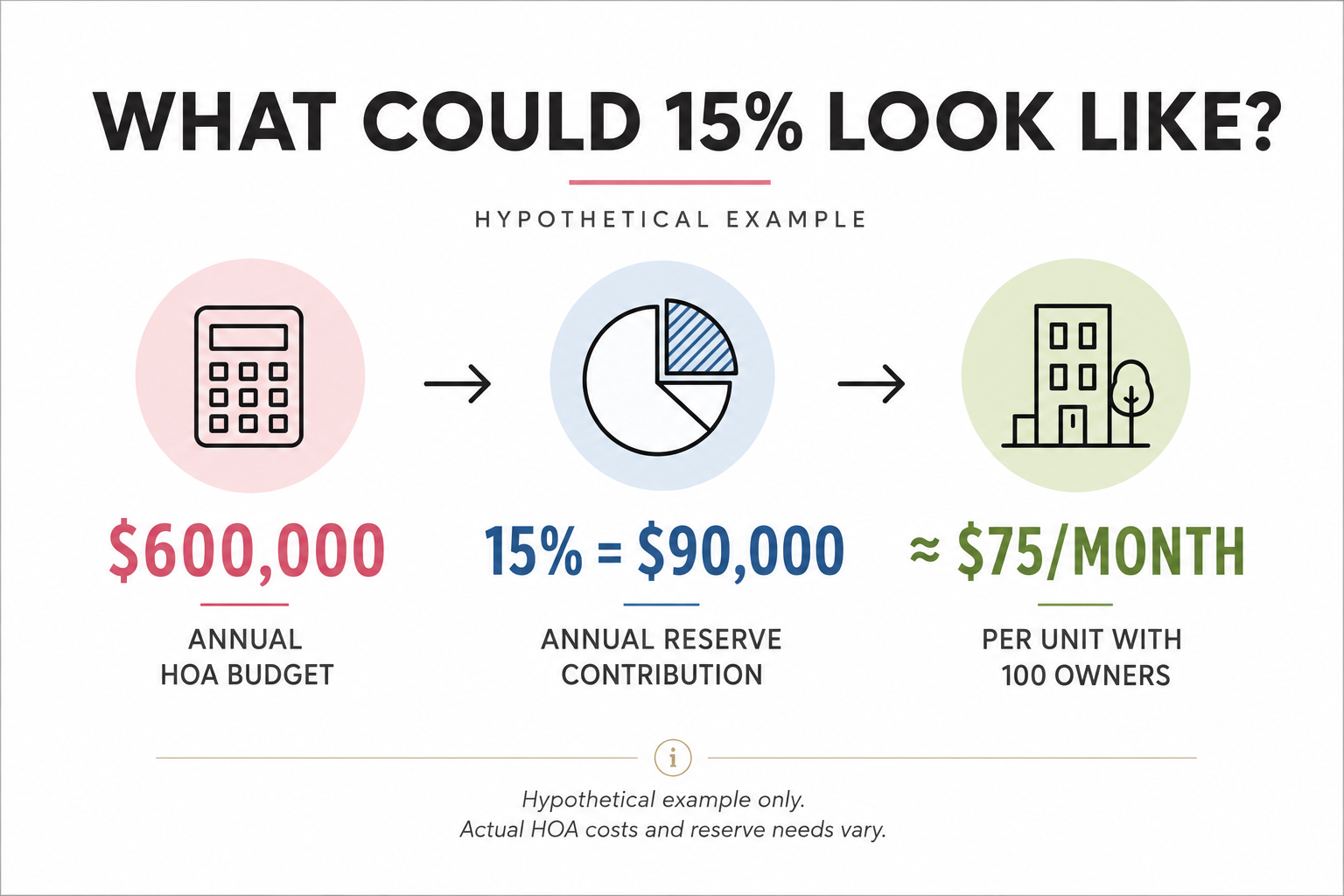
Here's a simple example:
An HOA with 100 units and a $600,000 annual budget would have a 15% reserve contribution of $90,000 per year.
Divided equally among 100 owners, that's about $75 per month per unit.
That's only a hypothetical example, but it shows how quickly a percentage can translate into real money for homeowners.
Is AB 2050 Law Yet?
No.
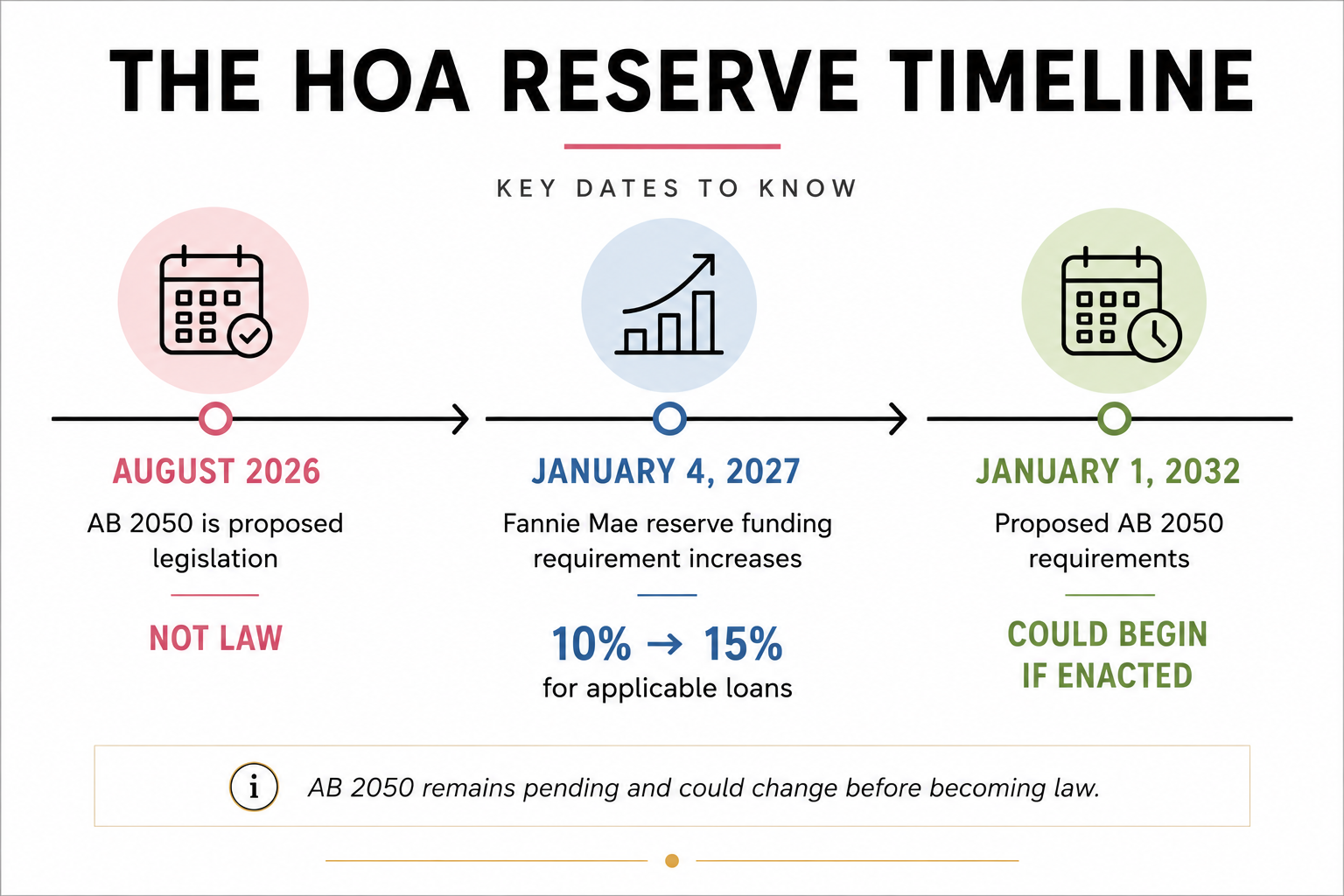
Based on the August 2026 information used for this article, AB 2050 is still pending and could change before becoming law.
Under the current proposal, the new requirements wouldn't begin until January 1, 2032.
But that doesn't mean condo owners should ignore reserve funding until then.
Why This Matters Now
Banks and mortgage programs are already paying closer attention to HOA finances.
Separate from AB 2050, Fannie Mae is increasing its reserve-funding requirement from 10% to 15% of an HOA's annual budget for applicable loans beginning January 4, 2027.
That's important because an HOA's financial health can affect more than monthly dues.
It can also affect financing.
If a condo project doesn't meet applicable lending requirements, buyers may have fewer financing options. Fewer eligible buyers can make a property harder to sell.
So while AB 2050 may be years away from taking effect, the larger issue is already here.
The Part Most People Miss
A reserve study isn't just about how much money an HOA has in the bank.
It's based on projections.
How long will the roof last? When will the complex need exterior work? What will those repairs cost five, ten, or twenty years from now?
Those estimates help determine how much an HOA should be saving.
That's why when I'm reviewing HOA documents for a client, I don't just want to know whether there's a reserve study.
I want to understand what it says.
What I Tell My Condo Buyers and Sellers
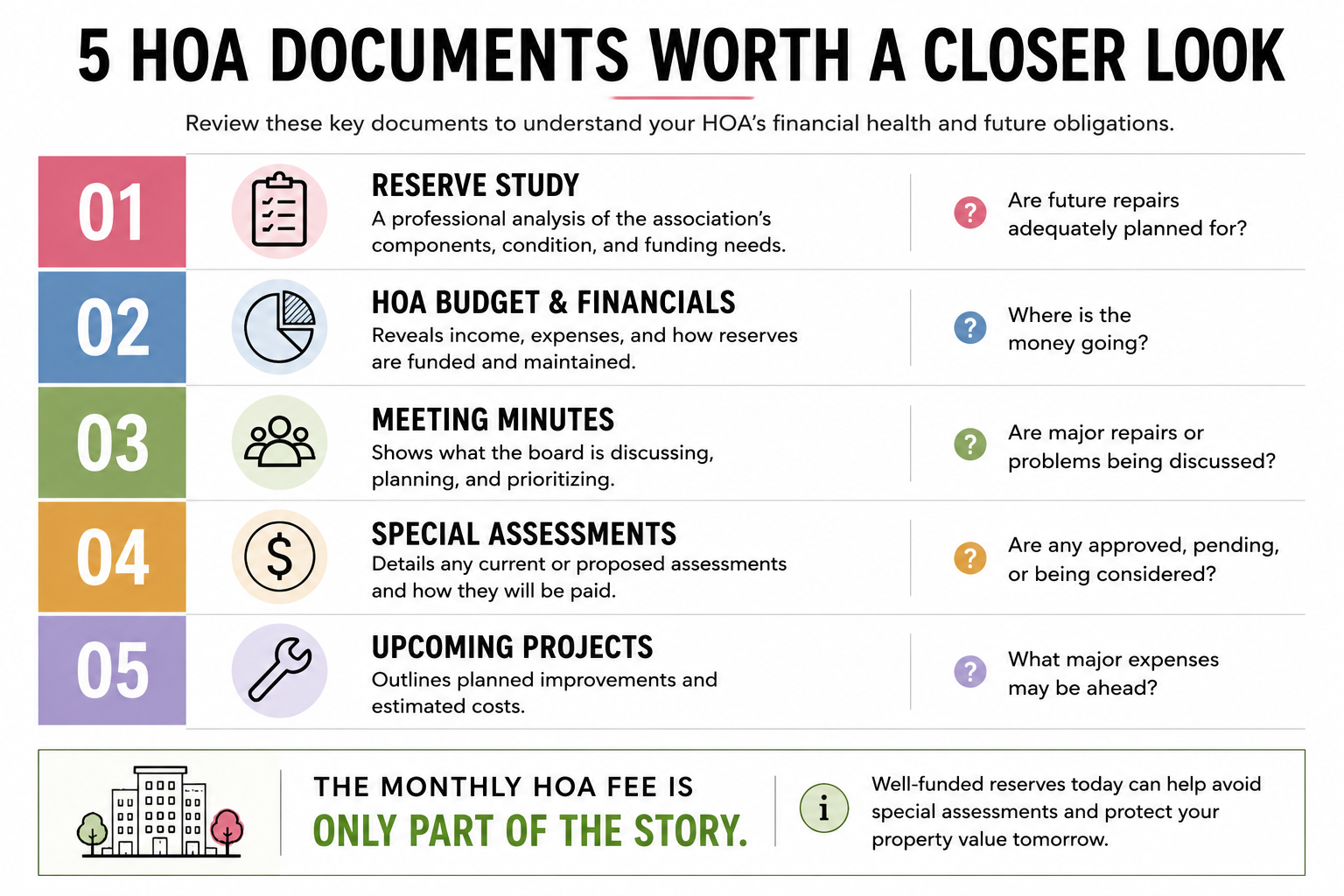
If you're buying a condo in Silicon Valley, request the reserve study and review the HOA's budget, financials, meeting minutes, upcoming projects, and special assessments. Ask your lender whether the condo project meets its current financing requirements.
If you're selling a condo, understand your HOA's financial position before you list. Find out whether there are reserve concerns, upcoming projects, or assessments a buyer is likely to discover during their review.
None of that depends on AB 2050 passing.
It's simply good due diligence.
The Bottom Line
AB 2050 isn't law yet, and it could still change.
But it highlights something condo owners, buyers, and sellers should already be paying attention to:
The financial health of an HOA matters.
It can affect what you pay as an owner, what a buyer can finance, and potentially how easy your condo is to sell later.
If you're buying or selling a condo in Silicon Valley and want help understanding what to look for in the HOA documents, reach out. This is exactly the kind of information I want my clients to understand before it becomes a problem.
For additional information, read California Builder Services' breakdown of AB 2050.
This article reflects information available in August 2026. AB 2050 is pending legislation and may change. This content is for general educational purposes and is not legal, tax, lending, or financial advice.