Selling an Inherited Home in Silicon Valley:
What You Need to Know
Inheriting a home is rarely simple. You're grieving, you're often dealing with siblings or other heirs, and now you're supposed to figure out taxes, paperwork, and whether to sell, rent, or keep the place, all at once.
I've worked with families through this exact situation for years. This post walks through what actually happens when you sell an inherited home in Silicon Valley, so you know what to expect before you're in the middle of it.
Key Takeaways
How the home was owned decides almost everything. A living trust, probate, or multiple heirs with no trust each lead down a different path, with different timelines and paperwork.
Buyers, title companies, and lenders will want proof of legal authority to sell. Trustee documents, probate letters, a death certificate, and sometimes court approval are standard requirements, and getting them together early avoids delays later.
There's no single right way to sell an inherited home. A full market listing, an as-is sale, or a cash buyer each trade off price against speed, and the right choice depends on the family's situation.
Keeping the home can trigger a big property tax jump. Under Proposition 19, an inherited home's property taxes generally reset to current market value unless an heir moves in as their primary residence within a year. This is the single biggest reason I see Bay Area heirs decide to sell quickly rather than hold onto the property.
Inherited property often gets a "stepped-up" tax basis. That's different from the property tax issue above, this one's about capital gains tax if you sell, and it can reduce or eliminate what you owe. The details depend on your specific situation, so a CPA should confirm it.
Getting documentation in order early prevents most delays. Carrying costs add up every month a sale stalls on paperwork, and disagreements among multiple heirs are easier to resolve before a deadline is looming.
The Big Reason So Many Bay Area Heirs Sell Right Away: Property Taxes
I want to put this one front and center, because it's the single biggest factor I see driving heirs to sell quickly instead of holding onto an inherited home.
Here's the issue. If your parents bought their home decades ago, California's Proposition 13 has kept their property tax bill tied to that old purchase price, with only small annual increases allowed. A home bought for $150,000 in the 1980s that's worth $2 million today might still be taxed as if it's worth a small fraction of that.
Under Proposition 19, which took effect in 2021, heirs generally only keep that low tax basis if they move into the home as their primary residence within one year of inheriting it, and the home's value doesn't exceed the parent's old assessed value by more than roughly $1 million (that cap adjusts every two years, so confirm the current number with the county assessor or the BOE link below rather than relying on a figure that could be outdated by the time you read this).
If you don't move in, or the value exceeds that threshold, the property gets reassessed to current market value as of the date of death. In the Bay Area, where home values have grown enormously since most of these properties were purchased, that can mean a property tax bill that's five or ten times higher, starting immediately.
That's why so many heirs here choose to sell rather than rent the place out or hold onto it. The math often doesn't work: you're paying a modern property tax bill on a home you're not living in, while the rental income, and the appreciation you might be hoping for, doesn't come close to covering the difference. Selling and taking the proceeds usually makes more financial sense than carrying that tax burden.
This is separate from the capital gains "stepped-up basis" I mentioned above. That one affects what you owe if you sell. This one affects what you'd owe every year if you keep the home. Both point in the same direction for most Bay Area heirs: sell sooner rather than later, unless you're planning to actually live in the home yourself.
Figure Out How the Home Was Owned
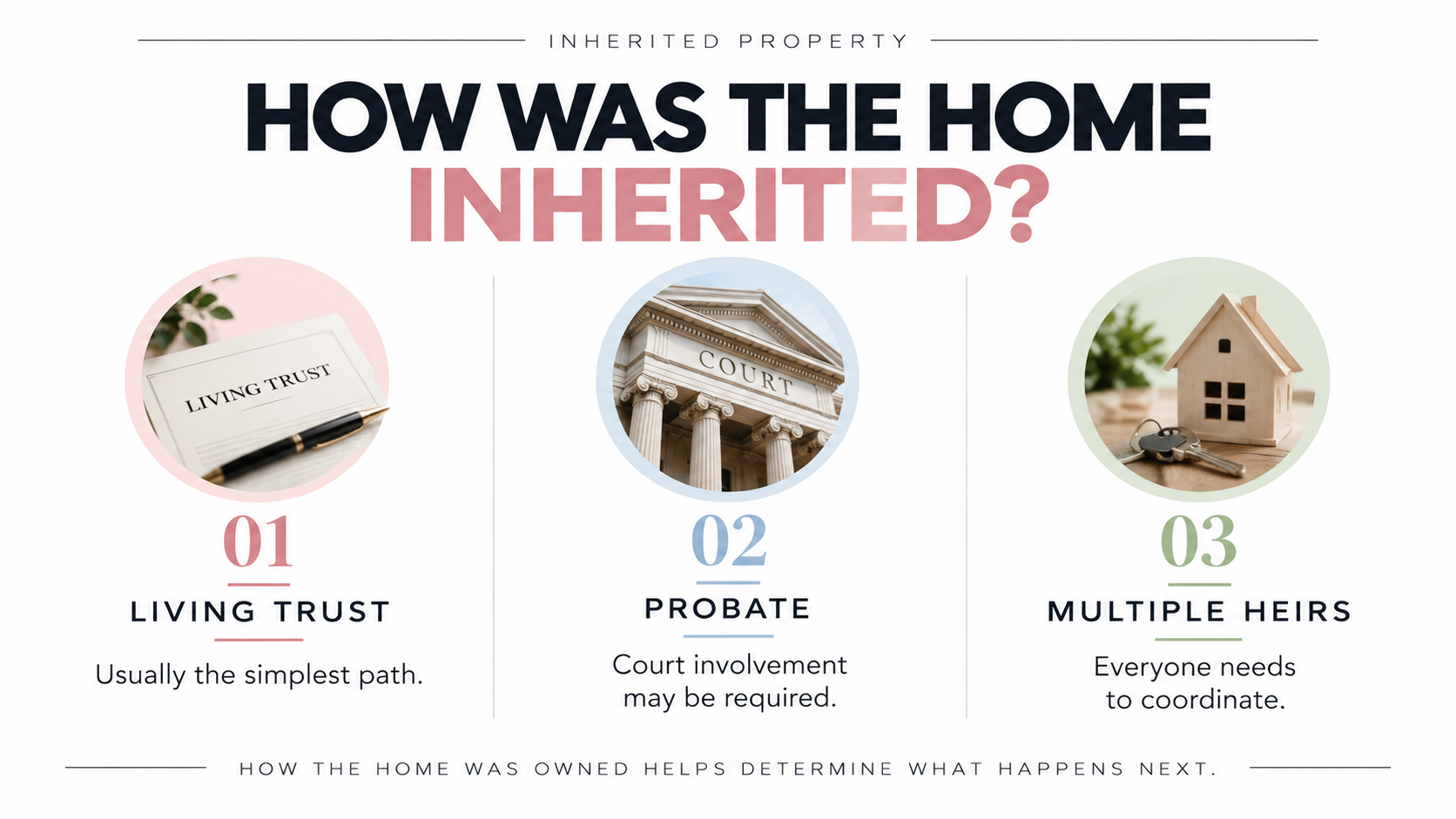
This decides almost everything else. There are three common situations, and the two terms you'll hear most are living trust and probate, so let me define them quickly before I get into each scenario.
A living trust is a legal arrangement someone sets up while they're alive, naming who takes over the property when they die, without a court needing to get involved. Probate is the court process that happens when there's no trust, and a judge has to formally approve who inherits what and give someone legal authority to act.
With that out of the way, here's how those play out in practice.
The home was in a living trust. Whoever the trust names as successor trustee has the legal authority to sell the property, usually without going through probate court. This is generally the fastest and simplest path.
The home goes through probate. If there was no trust, or the will alone controls the property, the court usually has to appoint an executor or administrator before anyone can sell. This process typically takes longer and may require court approval of the sale itself.
Multiple heirs inherit together, with no trust. This is often the hardest situation. Everyone with an ownership share generally has to agree on the sale, the price, and how proceeds get split. Disagreements here can stall a sale for months.
If you're not sure which situation applies to you, that's normal. It's worth a conversation with an estate attorney early, before you list anything or make commitments to a buyer.
What You Usually Need to Sell
Regardless of which path applies, buyers, title companies, and lenders will generally want to see documentation proving the seller actually has the legal right to sell. That typically includes:
Proof of trustee authority, or letters testamentary/letters of administration from probate court
A certified copy of the death certificate
The trust document or will
Sometimes, court approval of the specific sale terms, in a probate sale
Title companies won't close without this. Getting it in order early is one of the most common places sales get delayed.
Should You Sell As-Is, Fix It Up, or Sell to a Cash Buyer?
This is usually the biggest decision heirs face, and there's no single right answer. It depends on the home's condition, how quickly you need to close, and how many people are involved in the decision.
Listing on the open market, after some repairs or staging, usually gets the highest price, but takes longer and requires upfront work and cash.
Selling as-is to a traditional buyer skips the repair work but usually means a lower offer, since buyers price in the unknowns.
Selling to a cash buyer or investor is fastest and simplest, often closing in days instead of months, but almost always comes with a lower sale price in exchange for speed and certainty.
None of these is automatically better. A family that needs to close quickly and split proceeds without more disagreements might value speed over maximizing price. A family with time and one person managing the process might get more value from a full market listing. This is exactly the kind of decision worth talking through before you commit to a path.
A Tax Detail Worth Knowing About (Then Talk to a CPA)
Here's something that surprises a lot of heirs in a good way: when you inherit a home, your tax basis in the property usually "steps up" to its fair market value on the date the original owner died, not what they originally paid for it decades ago. That can significantly reduce or even eliminate capital gains tax if you sell soon after inheriting.
I want to be direct about this: that's a general, well-established concept, not advice for your specific situation. Tax rules get complicated fast depending on how the property was held, how long you wait to sell, and your individual circumstances. Talk to a CPA or tax attorney before making decisions based on this. I'm not one, and I'm not going to pretend to be.
Common Mistakes Made
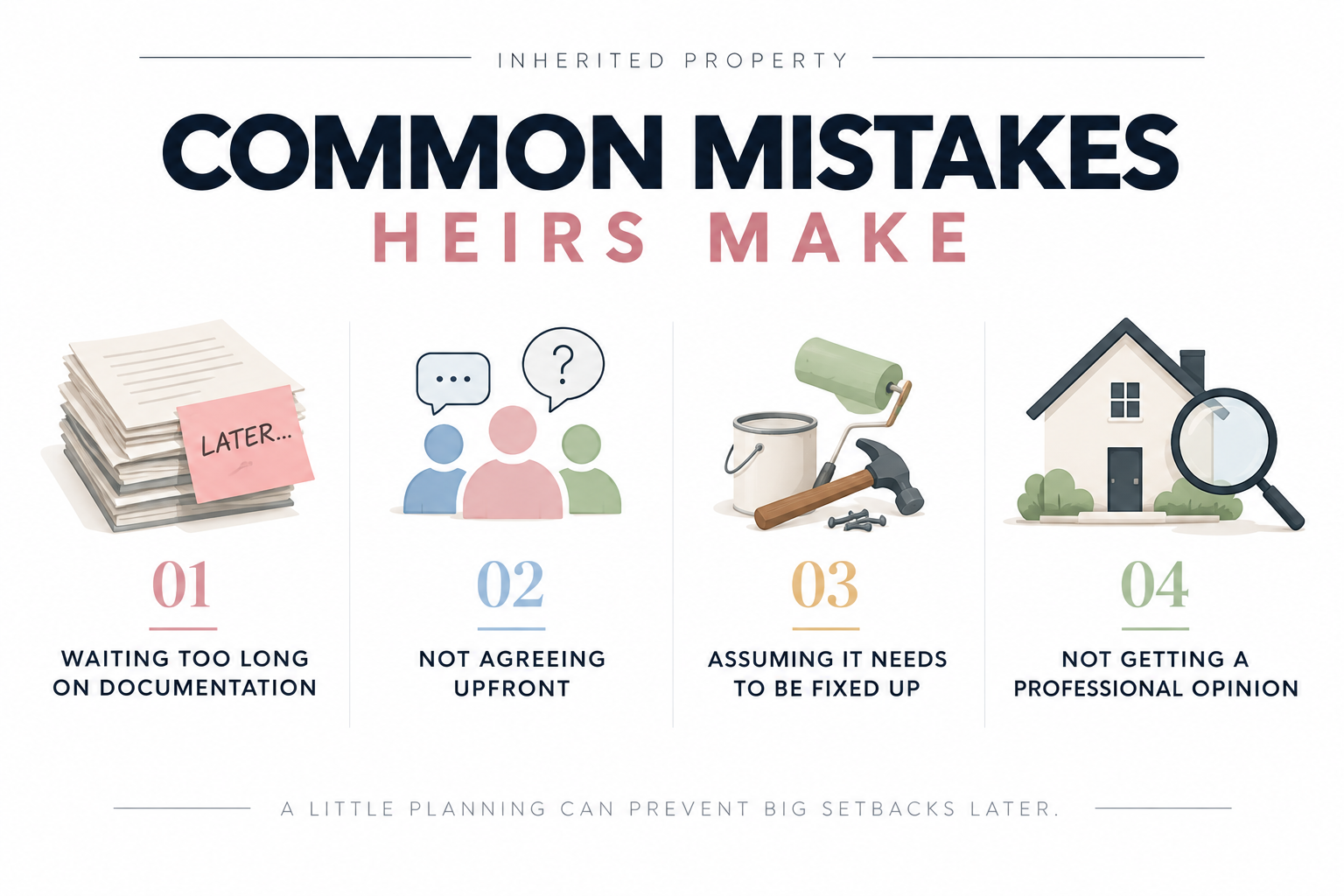
Waiting too long to get documentation in order. Buyers get nervous when a sale stalls on paperwork, and carrying costs (taxes, insurance, utilities, maintenance) add up every month the home sits.
Not agreeing on a decision-making process upfront, when there are multiple heirs. Deciding early how disagreements get resolved saves a lot of pain later.
Assuming the home has to be fixed up before it can sell. Sometimes that's true. Often, especially with older or dated homes, it isn't, and repairs can cost more than they add to the sale price.
Not getting a professional opinion on value before pricing. Emotional attachment or outdated assumptions about the neighborhood can lead to a listing price that's off in either direction.
Helpful Resources
I pulled these from official sources so you can read the primary information yourself, not just take my word for it.
California Courts Self-Help Guide: Wills, Estates, and Probate, the state's own plain-language overview of how probate works.
Santa Clara County Superior Court, Probate Self-Help, local guidance if the estate is being handled in Santa Clara County, which covers much of Silicon Valley.
California State Board of Equalization, Proposition 19, how inheriting a home can trigger a property tax reassessment in California, and the rules for keeping a parent's lower tax base.
IRS Publication 559, Survivors, Executors, and Administrators, the federal government's own guide for people handling a deceased person's estate and taxes.
IRS Publication 551, Basis of Assets, covers how basis works for inherited property, including the "step-up" concept mentioned above.
I'm not a lawyer, a CPA, or a court employee, so treat these as starting points, not a substitute for advice specific to your situation.
How We Can Help
I've handled inherited-property sales for Silicon Valley families for years, working alongside estate attorneys, coordinating with title companies on trustee and probate documentation, and helping heirs weigh the real tradeoffs between a fast cash sale and a full market listing. If you've inherited a home and aren't sure what to do next, that's exactly the kind of situation worth a conversation before you make any decisions.
Reach out to the SV Homes Real Estate team. We'll walk through your specific situation and lay out the real options, no pressure, no guessing.
This post is general information based on common real estate practice in California, not legal or tax advice. Every situation is different. Talk to an estate attorney and a CPA about your specific circumstances before making decisions about an inherited property.